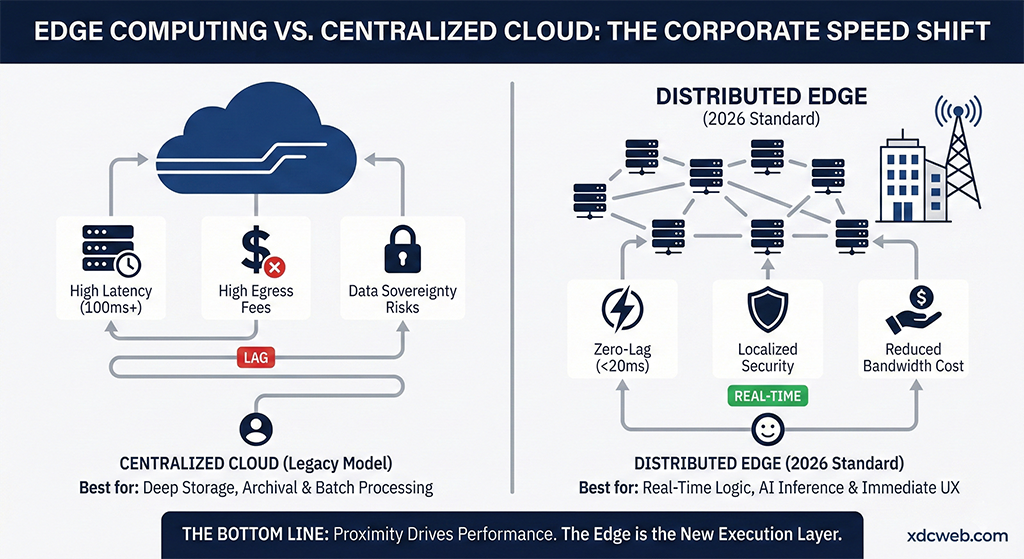
The physical speed of light is officially the bottleneck for modern application architecture. For the last decade, we treated the cloud as an infinite resource capable of handling any load. In 2026, that centralized model is hitting a hard wall. The speed wars are no longer about bandwidth width. They are entirely about physical proximity.
We are witnessing a fundamental architectural split. The monolithic cloud is retreating into a role of deep storage and heavy archival processing. Meanwhile, the edge is taking over the execution layer. For developers and UI designers, this distinction dictates the entire logic of the user experience.
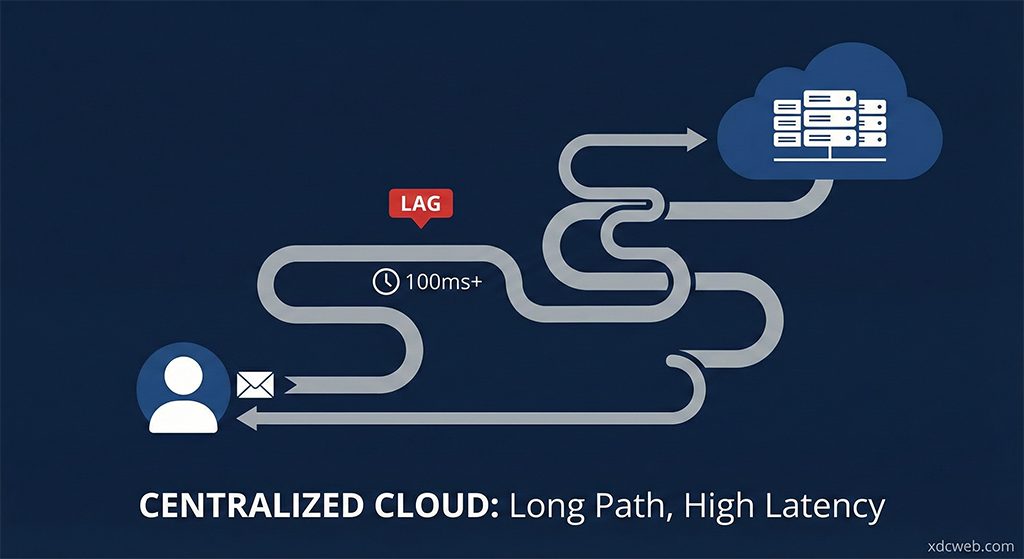
The central failure point of traditional cloud architecture is the round-trip time (RTT). Sending a request from a device in Manila to a data center in Singapore, processing the logic, and sending it back takes time. In the era of standard web forms, 100 milliseconds was acceptable. In the current era of real-time AI and spatial computing, 100 milliseconds is a broken product.
Edge computing solves this by pushing the computational logic out of the centralized data center. It moves the workload to the local network periphery. This is the server rack at the base of the cell tower or the local ISP gateway. We are effectively moving the brain closer to the hand.
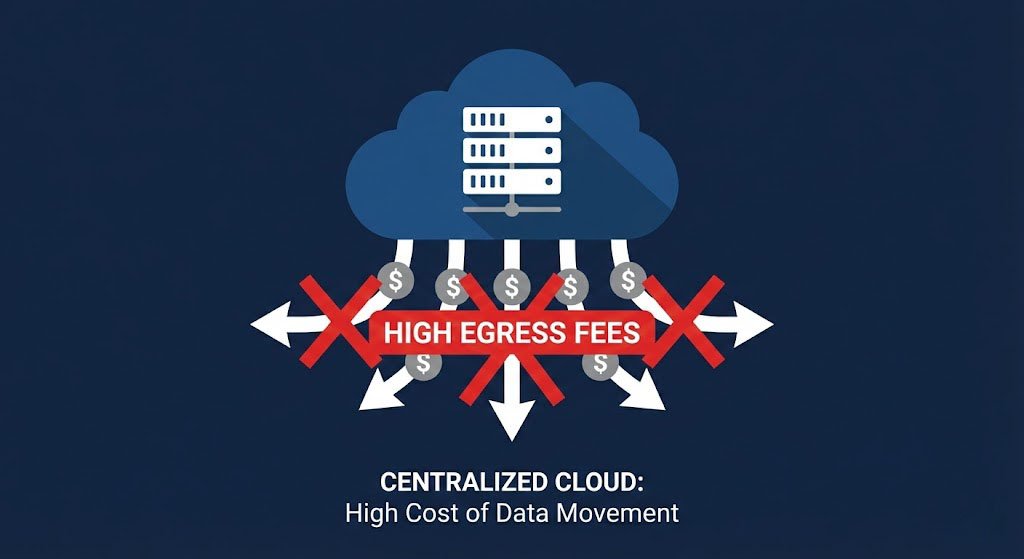
The economic argument has also flipped. Years ago, the edge was too expensive to maintain. The cloud was attractive because it converted capital costs into predictable operating expenses. However, data egress fees have made the centralized cloud financially toxic for high-throughput applications.
Processing data at the edge reduces these egress costs. By filtering and analyzing telemetry locally, you only send the necessary insights back to the central cloud. This architecture lowers the bandwidth bill. It also secures the data pipeline by keeping sensitive raw information within the local jurisdiction, which is critical for 2026 data sovereignty compliance.
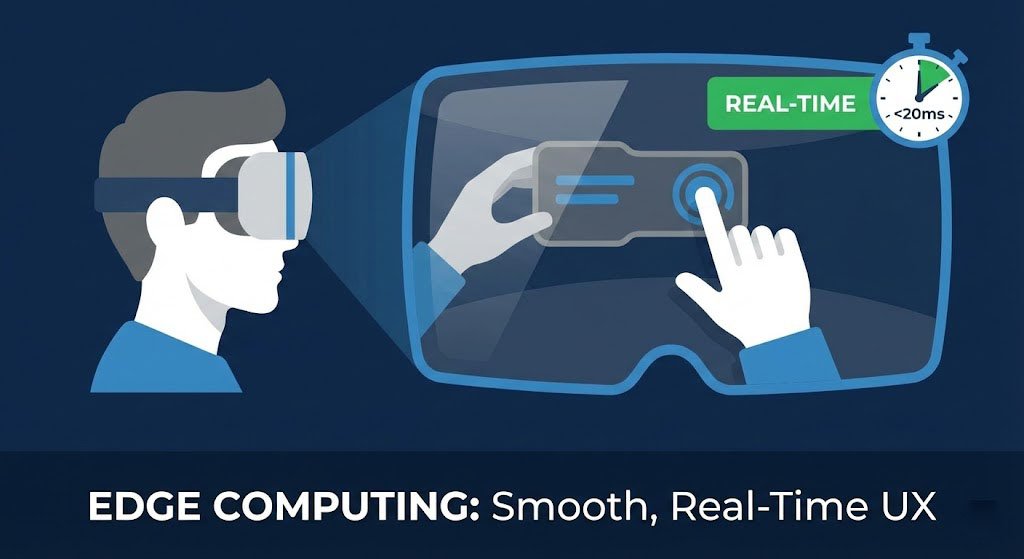
The implications for UI engineering are immediate. We are now designing for a “Zero-Lag” standard. Interfaces in 2026 must feel organic. When a user manipulates a 3D object in a mixed-reality environment, the rendering must happen within the photon-to-motion latency threshold. A centralized cloud server simply cannot defy the laws of physics to meet that deadline. Edge nodes can.
This creates a new hierarchy in full-stack development. The backend is no longer a single destination. It is a continuum. We deploy serverless functions to the edge for immediate interaction like authentication and personalization. We reserve the central cloud for heavy lifting that doesn’t require real-time feedback, such as model training or historical analysis.
| Feature | Centralized Cloud (Legacy Model) | Distributed Edge (2026 Standard) |
| Architecture | Monolithic: Data processes in distant, massive data centers (e.g., Singapore, N. Virginia). | Distributed: Data processes at the network periphery (e.g., local ISP, cell towers, on-premise). |
| Latency (RTT) | High (>100ms): Limited by physical distance and fiber optics. | Ultra-Low (<20ms): “Zero-Lag” performance due to physical proximity. |
| Cost Driver | Egress Fees: High costs for moving massive data out of the cloud. | Infrastructure: Higher initial setup, but drastically reduced egress fees. |
| Data Security | Sovereignty Risks: Data may cross international borders, complicating compliance. | Localized: Data stays within local jurisdiction, ensuring easier compliance. |
| UI/UX Impact | Buffering/Lag: Noticeable delay in real-time interactions (VR/AR). | Organic: Immediate “Photon-to-Motion” response for spatial computing. |
| Best For | Deep storage, archival, model training, and historical analysis. | Real-time AI inference, authentication, IoT, and immersive UI. |
Advertisers and infrastructure providers are pouring capital into this layer. We see this in the aggressive rollout of localized zones by major providers. They are not building more massive data centers. They are miniaturizing them and placing them in every major city block.
For the enterprise architect, the choice between edge and cloud is not binary. It is about placing the workload where it makes economic sense. If the application requires immediate cognitive response, it lives on the edge. If it requires deep retention, it lives in the cloud.
The speed wars of 2026 are not being won by making processors faster. They are being won by reducing the distance to the user.